Angstism...

SOCIAL ANGST is more than just a blog, it is an invitation to aid in the building of wealth through the shared task of information distribution and discussion. It is a call to engage – engage in society, engage with your peers, engage in your political system, engage in spreading the wealth that is information, and engage in multiplying that wealth through discussion – so that collectively we may become more socially aware, more socially responsible, more socially vocal and ultimately more socially valuable

Tuesday, November 10, 2009

In The News:
Kareem Abdul-Jabar's Leukemia Diagnosis

NEW YORK — Kareem Abdul-Jabbar is being treated for a rare form of leukemia, and the basketball great said his prognosis is encouraging. The NBA's all-time leading scorer was diagnosed last December with chronic myeloid leukemia, he told The Associated Press on Monday.

The 62-year-old Abdul-Jabbar said his doctor didn't give any guarantees, but informed him: "You have a very good chance to live your life out and not have to make any drastic changes to your lifestyle."

Read the full story at Huffington Post.

Share/Save/Bookmark

Monday, November 9, 2009

Review: Precious -
Based on the Novel Push by Sapphire

From a cinematic standpoint, I have nothing but admiration for Precious. Many fans of the novel thought it would be impossible to bring the gritty, dark, dysfunctional life of Precious Jones to life but screenplay writer Geoffrey Fletcher achieves near technical precision with his purist adaptation of Push for the big screen. The story is translated seamlessly under the watchful direction of Lee Daniels, who never strays very far from the essence of Push. Daniel does wield some creative license (notably the addition of several fantasy sequences) however, it is used sparingly throughout the film and only as a means to balance the tense subject matter.


Casting is another highlight of the film. Newcomer Gabourey Sidibe is casting perfection as Clarice Precious Jones. On first appearance one might assume that Sidibe is simply the result of hollywood type-casting. The dark skinned, overweight actress, is a visual doppelganger for the Precious character, however that is where the similarities end. In reality, with beautiful dark skin, small but expressive eyes and larger than life confidence, Sidibe is the actually the antithesis of Precious; yet on camera and in character she convincingly captures every impotent, frail, and painful moment Precious must struggle through. Sidibe tackles the emotional peaks and valleys of her character like a pro and her audience is left with a tremendous sense of empathetic understanding because of it.


Surrounding Sibide is a truly commanding ensemble cast. Mo’nique gives a powerful performance as Mary, the wildly abusive, deranged, miserable wretch of a woman who gave birth to Precious (I cannot in good conscience call this character a mother). Fueled by self-hatred, Mary molests, mangles, and drains the soul out of Precious at every given opportunity. Two other strong performances come from Paula Patton as Ms. Rain, an alternative school teacher who helps Precious find self-worth, and Mariah Carey as Mrs. Weiss, a social worker who helps Precious face her circumstances.


The film has near perfect pitch. The characters are easy to identify with, root for, or alternatively despise. It is alarming, humorous, empathetic, raw, and disarming all at once, making for true cinematic achievement.


Yet, Precious is not perfect.


There are several aspects of the book that are lost in translation from page to screen and these subtle misinterpretations rob the film of some authenticity. First, moviegoers are cheated out the chance to truly delve into the world of an illiterate. The novel Push was published in unedited broken English. Through the grammarless dialogue and phonetic spelling, readers are able to see just how sadly underdeveloped Precious is academically. The movie is far less successful in that area (so much so that the audience around me laughed while witnessing a class of 16-year olds learning their ABCs – completely oblivious to the socioeconomic hardships and systematic devaluation of illiterate and uneducated individuals).


The depiction of sexual abuse was also disappointing. The unholy acts of incest that were graphically detail in the book were replaced in the film with far less explicit visual elusion. As a result, the audience can only vaguely identify with the trifecta of abuse that Precious endured.


Yet, even with the slight creative changes, Precious is a truly worthwhile endeavor for movie patrons. Audience members have the opportunity to learn a lot about themselves as they watch the film. Precious will challenge your own biases – about poor people, overweight people, uneducated people and people without mainstream aesthetic appeal. For those who believe that ignorance is a personal choice brought on by bad decisions, this movie will also challenge you to see that some people – people who want to learn, work hard and thrive - are born into bad circumstances that are impossible to escape without help. But most importantly, Precious will hopefully challenge you to see how neighborly love and philanthropy of spirit can change the lives of those around us.


Social Angst encourages you to see the movie...and then read the book!


Share/Save/Bookmark

CNN Presents: Black Men
in the Age of President Obama


Share/Save/Bookmark

Friday, November 6, 2009

In the News: Stories of Interest


Greetings and good day all.

Here's a list of stories/op-ed pieces from around the net that may interest you. You can also follow me on google reader where I share my favorite blog posts from around the 'sphere and anything else that tickles my fancy.

Share/Save/Bookmark

Thursday, November 5, 2009

RE: Talented Tenth?
Guest Blog: Superiority Complexes


For the last week I've been floating high; my Talented Tenth post was received warmly and with the exception of my parents using the opportunity to inquire about my future plans (plainly put: why are you wasting your life? (thanks Belle)) I've been absolutely delighted with my return to the blogosphere.

Yet today, I'm even happier.

One of my biggest motivations for starting Social Angst was to inspire activism (personal and communal) through dialogue. So I was both excited and gratified this morning when I read a piece by A Smith over at The Oulook, entitled Superiority Complexes. In the piece Smith uses a portion of the Talented Tenth post as a springboard to discuss the innocent and unintentional development of superiority complexes. The piece is both candid and insightful and I have posted it below for your enjoyment.

Don't forget to stop by The Oulook and show Ms. Smith some love!


About A Smith (in her own words):
I'm a part-time blogger and full time thinker. I blog because I think and need somewhere to put it down in hopes that other people will read it, identify with it or not identify with it, start thinking themselves and share their thoughts with me.


SUPERIORITY COMPLEXES

BY A SMITH

This morning it occurred to me that I may be developing a “you don’t know who I am” complex. It’s because of where I work. Many people here have that complex. I work with/around some of the most powerful people in America. Some of these people have the type of clout to get folks fired from jobs they’ve held for years, just because they want to. One swift e-mail from some of these people could put lots of money into your organization, or strip it all away. As a result, many people here have a “you don’t know who I am” complex. That is, small gaffes like mistaking them for someone of “lesser” importance can piss them off enough that they find it necessary to prove to you who they are by somehow negatively impacting whatever organization or group you represent. I’ve seen it happen.

It’s a complex born of an environment that thrives on clout, capital (of the non-tangible kind), and typically manifests itself worse among people who’ve never had power before. Power is and can be a very dangerous thing. I’ve heard many people, like the recently convicted former Mayor of Birmingham, AL, say that power is a dangerous drug. I hate the people around here who take their power for granted and too far and I’ve tried to be careful of developing this complex, but I see many of the seeds have been planted.

A few nights ago, I had an especially mentally stimulating conversation with a friend. She told me she was ashamed of herself for thoughts she had and assumptions she made with regards to a student she was tutoring. It’s worth noting that she and I have similar backgrounds. Both are black, female, and the only child of a single mother. We both graduated from private high schools and we both attended the same university. We are almost the same age (less than a year seperates us) and we have similar (not the same, but similar) interests as it relates to the types of ideallic things we do/wish to do. When she told me she wondered if the education we recieved at our elitist undergraduate institution had somehow lent itself to making it easier for us to have some of the same negative thoughts about low-income minorities as some of the ignorant individuals we dislike so greatly, it sort of struck a nerve with me.

I immediately thought of a post I read by a guest blogger on A Belle in Brooklyn. The title of the post was “Why The Talented Tenth is failing the black community” and written by Brandi, author of a blog titled Social Angst. I specifically remembered this portion (quoted here w/out permission, but be sure to check out both the post and her blog via the links provided):

The most pressing issue of Black America is the growing divide between the “haves” and the “have-nots.” Those who have access hoard it. And the talent of lower class individuals is being both unrecognized and unsolicited by the top tier of Black society. We are not meeting our obligation to nurture those who have less access. We are failing ourselves and it is starting at the top…

If you are not actively seeking out and pulling up the deserved, can you truly call yourself part of the Talented Tenth? Without commitment to the covenant aren’t you just simply elite? And, if you are simply elite, is your impact on Black American culture benefitting anyone other than you and your insular circle of friends?

I mentioned this post and specifically the general idea of the quoted portion to my friend. I highlighted how many of our friends in undergrad tutored low-income students for community service. I wondered, aloud, for how many was it about helping these students or looking good to and for various organizations. I also wondered how often we really paid attention to the students we tutored/mentored. How often did we try to bring out and foster their talents? How much time did we spend getting to know them and so what sort of impact did we actually have? Were these students truly any better because they knew us — were we truly fulfilling our purposes, or was it all self-serving? It’s sad to say, but true I think, that it was, for too many of us, self-serving and because of a superiority complex.

I talked about my own beginnings in community service; how I was drawn to it because it was amazing to me that I worked with students who were like me in every way. They were black, from single parent homes and my age (sometimes older) but that the lone thing that set me a part was the opportunity I had been given to attend a prestigious private school. I can still remember the moment it occurred to my 14 year old brain that there was almost nothing that seperated me from these students and yet they looked to me for help. I asked my friend, “what does it do us when we’re always the ones helping? How do we process that, ultimately? How do you not develop a superiority complex when people are always looking to you for help and in that, why would we ever really work to “actively seek out and pull up the deserved?”

I was burned out on “helping the kids” by the time I was 17. Between 2000 and 2004 I accrued well over 800 hours in community service; recieved the President’s Service Award more than once and had all types of plaques and accolades; however, I was totally over it all and for various reasons. One part of it was, quite frankly, I was developing a superiority complex.

Compared to high school, I did almost no community service in college. I wasn’t burned out anymore (even though that’s what I kept saying), but I still had remnants of the superiority complex. I had lost sight of why I had done community service; it wasn’t about the prestige it garnered, the plaques, the hours, the accolades, or how good it looked on my college application. It should have always been about the students I tutored and the connections we made. It’s hard to quantify what all was involved in the complex, but when you understand why you’re helping people it makes it harder to not help them. It’s when you think you’re “too good” for that or “too important” or “too busy” that it’s easy to avoid doing it.

As my friend and I continued talking we discussed a class we’d both taken in undergrad. The class discussed the plight of the low-income student in America (and included a “community service” initiative). Too often, we realized, “low-income” was connected with “black” or “minority.” Not only is that because for the most part that’s the case, but it’s also exactly what we were shown when went out into the community. My friend told me about a class she’s currently taking that seems to do the same thing. I expressed concern that not enough well-meaning professors give otherwise ignorant students the right tools.

Back to high school, my CS director required all new and returning tutors to participate in what eventually became a 2-day orientation discussion. She wanted to “prepare” these wealthy white kids for the stark reality of “life in the hood.” Unfortunately, it seemed more like an attempt to present the saddest “snapshot” she could. I remember sitting in the orientation my Senior year (I’d skipped it in the 2 years prior because I was a “site leader” and had ongoing commitments; I had to be there my Senior year as a “senior board member”) being utterly disgusted with how extreme her stories were. She claimed some of the kids were going hungry, some of the kids had no clothes, some of the kids were light years behind their peers in education; she made them sound like those starving African children you see on late-night tv. The truth was, these kids were not that different from us when we were that age. Sure, some of them lived in less than desired situations but not all of them. What her extreme representation of the situation did was to send these still-ignorant yet otherwise well-meaning wealthy white kids into a community that they didn’t understand and wouldn’t understand what with all the presupposed details. I found myself having to be frank with my tutors: “We expect nothing less than the best from these students. Their excuses are just that: excuses and we will not allow excuses to stop us from getting the best we can…”

My friend and discovered how far left of center we’ve come. How we assume things about individuals who are just like us. She shared that she’d assumed that the student she was tutoring came from a single-parent home and that none of her older siblings had attended college. Neither assumption was true and as my friend considered why she’d thought those things, she realized there was no reason, except that for the past 2 years she’s been bombarded with all the facts that say low-income black children are from single parent homes and don’t go to college. This is despite the fact that we are both proof that those “facts” don’t apply across the board and we have plenty of friends and associates who also disprove those “facts.”

The strength of a superiority complex is astounded when considered, here. I hate when people assume they know everything about me based on the color of my skin; more often than not, they aren’t correct. How outrageous, then, is it for me to make assumptions about someone who is just like me? Ultimately, though, the blame doesn’t lie with our education. The blame lies with us. It’s almost comical how these complexes have taken hold and I hadn’t thought about it or noticed it. How do you become ignorant and not notice it?


Share/Save/Bookmark

Wednesday, November 4, 2009

Social Commentary:
Where's the Villiage?


I’m getting old.

I find myself saying things that old people say:

“I remember when you couldn’t walk down your street acting a fool because you knew one of your neighbors would check you and report your misbehavior to your parents. For that matter, I remember when the word neighbor meant more than the guy occupying the house next to you.”

Oh how times have changed.

Last school year, one of my best friends, a teacher at a middle school, told me this story:

A student at her school, a miscreant of sorts, purposefully decided to cross the street in front of a moving car. The male driver of the car, a parent of another student, stopped short not to hit the kid. The adult driver rolled down the window to reprimand the child (middle school students are children) and was met with a disrespectful “f*** you”. The child then proceeded to assault the driver’s vehicle. Having had enough, the driver exited his car and grabbed the child. The scene ended with police escorting the driver (in handcuffs) and the child to the local precinct.

My friend and I had a rather candid discussion on the incident. There were so many fascinating elements to the story. Did the driver overstep his bounds by laying his hand on the child? Was the assault of his vehicle justification for his behavior? Do you let a 12 year old disrespect you in front of your own children, and if so, what do your children take away from that? Does whooping the behind of a disrespectful child benefit society at large? Is whooping the behind of a disrespectful child worth going to jail? Would you be upset if someone laid a hand on your disrespectful little brat?

In all honesty, I champion the actions of the driver. I am a firm believer that it takes a village.

Fast forward. Last week, a 15-year old girl was beaten and gang raped outside a school dance – while twelve people watched. The two hour long incident was witnessed by a dozen bystanders, none of which offered any help to the young victim. No help – no intervention, no call to authorities, no attempt to get involved - at all.

How did we get here? How did we get to this place of total indifference for our fellow man? My Uncle Ernest, Aunt Dorothy, and Grandmother would blame the disconnect between the Black community and the church. My mother and godmother would argue that Black parents aren’t parenting – partly because they are ill equipped and partly because family economics (i.e. check chasing) leaves children to parent themselves. My father, a retired NYPD detective, would insist that we have allowed the government to dictate how our community rears our kids. He would say that fear of litigation and prosecution keeps citizens from reprimanding children other than our own. Of course, they are all right.

There was a time when raising children was a collaborative effort and the byproducts of that village mentality were respect, shame, and responsibility. Children who are brought up with village mentality are mindful of their behavior because someone could be watching. That is a fear we all benefit from. Unfortunately, many parents are uncomfortable with other people reprimanding their children. If their child acts out, these parents want you to call them so the issue can be resolved between parent and child. The problem is that when parents become the sole motivation of fear for their children, they also become sole authority figures; leaving teachers, neighbors, and family members robbed of communal authoritative power in the process.

So, how do we go about reinstating the importance of Black community? Baby steps I suppose. Introduce yourselves to your neighbors. Exchange email address with your child’s teacher, principal and school security officer. Then, be ready to face the truth about your child (for undoubtedly, he's no angel) and remember that if your child misbehaves, he has a responsibility to apologize, publicly, to those he offended.

If that fails, don’t worry, I have a plan that will allow everyone to get involved...


What are your thoughts on our lacking sense of community?


Whooping a child's behind IS activism. Getting involved IS ACTIVISM.
Share/Save/Bookmark

Tuesday, November 3, 2009

Small Talk:
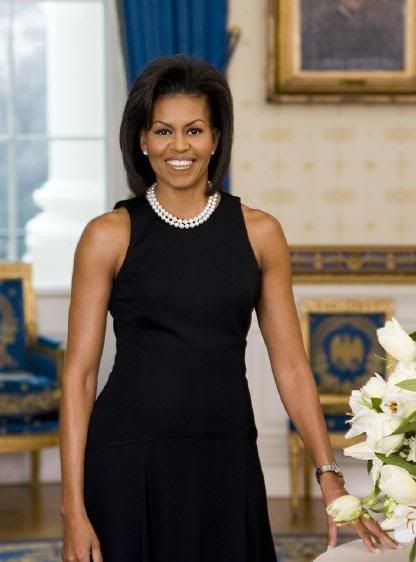
Michelle Obama's Mentorship Program


"...When I was starting my career at a big law firm, it was the first job I had out of law school. I went into a big, fancy law firm. And I really was excited. I thought I had made it, you know, because I’m making a salary that was more than both of my parents’ income combined, and I was, like, 24 years old. So I was, like, I made it.

But the interesting thing was that I worked in Chicago on the 47th floor of this beautiful building, and it looked directly south into my neighborhood. So everyday I’d go to the 47th floor in this big, fancy office with a secretary and I’d stare right at my neighborhood. Every day. It was sort of ironic because it reminded me that there are so many kids that but for the grace of God they could be here, they could be in my shoes. There were kids who were just as smart, just as funny, just as capable, but they missed an opportunity by a hair. You know, maybe they didn’t have the right parent. You know, maybe they just didn’t have that teacher who pushed them. You know, maybe it was money.

But it’s such a small set of possibilities that could make the difference between me and thousands of other kids. And I realized that when those opportunities don’t come, that gap just gets wider and wider and wider." - Michelle Obama


Monday, November 2 - Thirteen female high school students and 18 female White House staffers were in attendance for the launch of Mrs. Obama's East Wing mentorship program, an initiative aimed at matching local area female students with White House mentors. It is expected that about 20 female sophomore and junior high school students will be selected for the life skills oriented program. Student participants of the program have been selected by their principles as students who would benefit most from the opportunity.

The West Wing of the White House will follow suit with a mentorship program aimed at young men later this year. Mrs. Obama was visibly moved as she spoke to the crowd about the White House's commitment to the development of all children. Watch the clip below to see for yourself.


(At work and want to read the transcript? Jack & Jill Politics has it.)

Social Angst Commentary:


News of Michelle Obama's mentorship program made me smile. It is very "Talented Tenth" of her. Her humbling self portrait, in which she recognizes that her circumstances could have been very different without the mentors in her life, is deeply touching and (hopefully) equally inspiring. If the First Lady can manage to mentor - even with the Secret Service at her heels - all of us can make a little time to improve the lives of someone less fortunate than us.

Sources/More Information:
  1. Jack & Jill Politics: First Lady Initiates Mentor Program
  2. Politico: Michelle Obama Launches Mentoring Program
  3. Associated Press: First Lady launches White House mentoring program

Share/Save/Bookmark